

Sync Rules
Automatically create Exact Online invoices
When this toggle is on, the integration creates invoices in Exact Online automatically — no manual action needed on your end. Turn it off if you prefer to create invoices manually from the dashboard. This gives you full control over which orders get invoiced and when.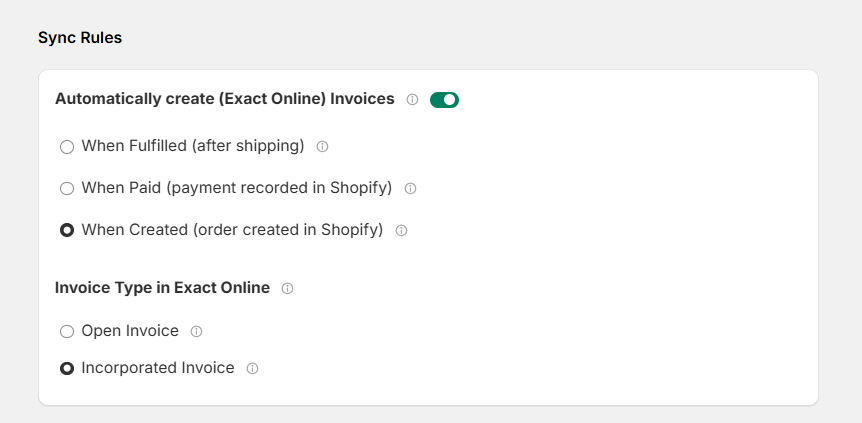
When should the invoice be created?
Choose the Shopify order status that triggers invoice creation:Pick the trigger that matches your business flow. If you invoice before shipping, use When Created. If you only invoice after goods are dispatched, use When Fulfilled.
Invoice type in Exact Online
Choose how the invoice is created in Exact Online:
Use Open Invoice if your team reviews invoices before posting them. Use Incorporated Invoice if you want everything finalized automatically without any manual step in Exact Online.
Additional Options
Fine-tune how the integration handles shipping charges, refunds, and other invoice details.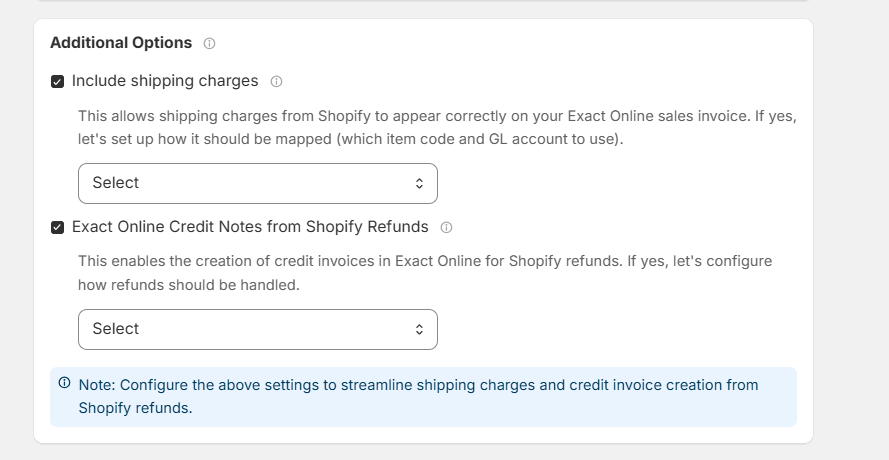
Include shipping charges
When enabled, any shipping cost on the Shopify order is added as a separate line on the Exact Online invoice — so your invoice reflects the full amount the customer was charged. You’ll also select which item code and GL account to use for shipping lines, so they’re posted correctly in your books.Exact Online credit notes from Shopify refunds
When a customer gets a refund in Shopify, this option automatically creates a matching credit note in Exact Online — keeping your accounting in sync without any manual work. You can configure exactly how refunds should be handled using the dropdown that appears when this option is enabled.Configure both shipping and refund settings before going live. Leaving these on Select means the integration won’t know where to post those amounts when they come through.
Field Mappings
Field mappings control which Shopify order data gets written into the invoice header in Exact Online.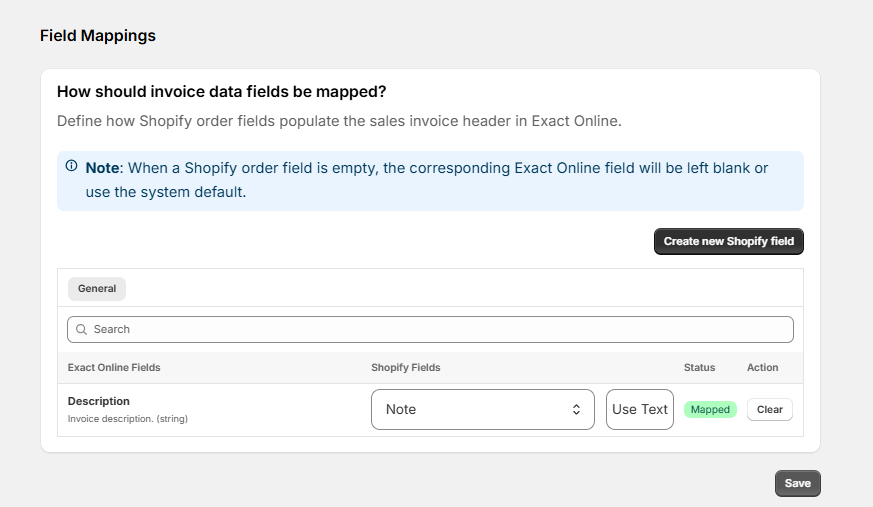
If a Shopify field is empty on an order, the corresponding Exact Online field will either be left blank or fall back to the system default.
You can add more mappings using the Create new Shopify field button — for example, mapping a Shopify order tag or custom field to an Exact Online invoice field.