Option 1: Simple Search
This method matches products between HubSpot and QuickBooks by correlating a specific field such as SKU or product number. It’s particularly useful for users with long product lists.1
From the HubSpot dropdown, select the field you want to use for product matching (e.g., SKU).
2
From the QuickBooks dropdown, select the corresponding field for automatic identification.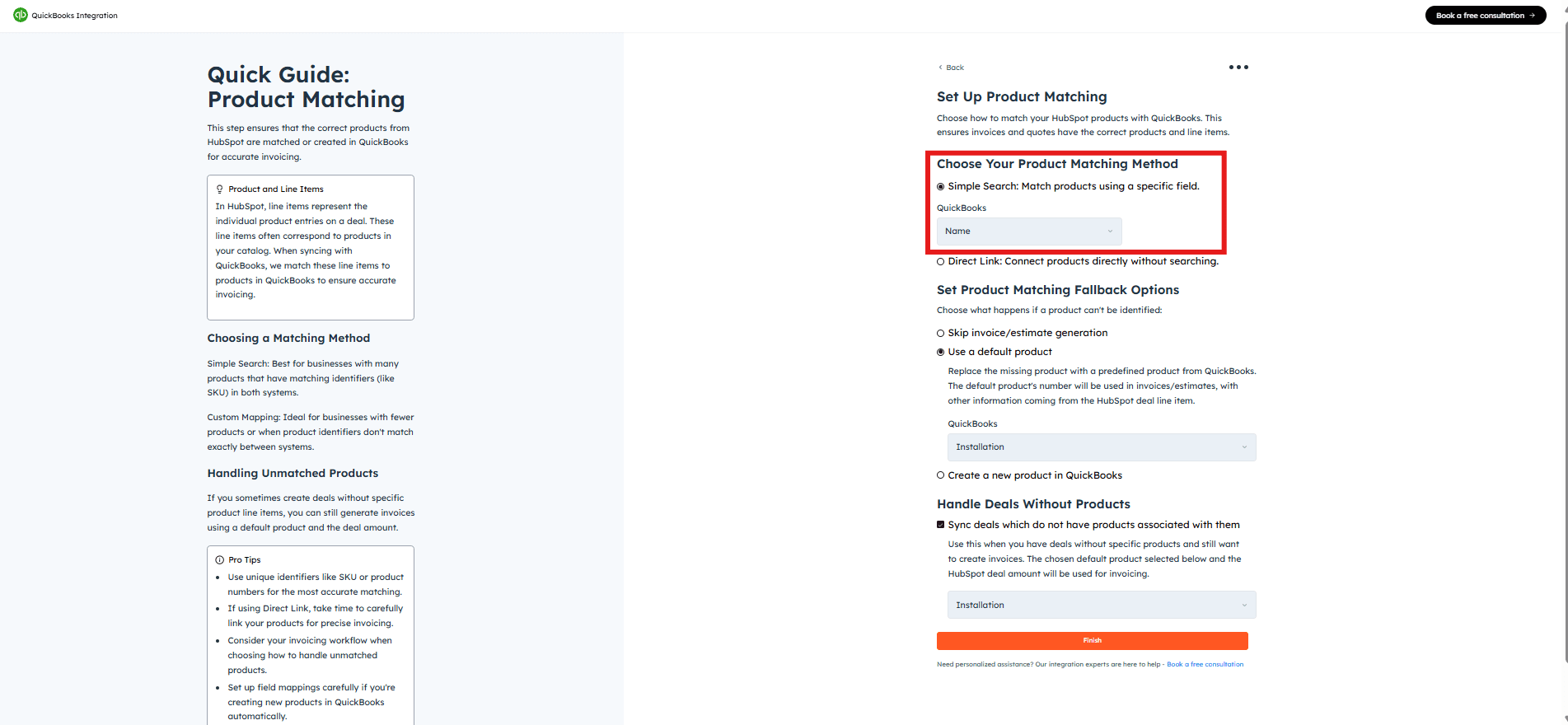
Option 2: Direct Link
Select this method to link specific products one-to-one between HubSpot and QuickBooks directly. This is particularly useful when the product count is low, allowing for precise manual matching of each product.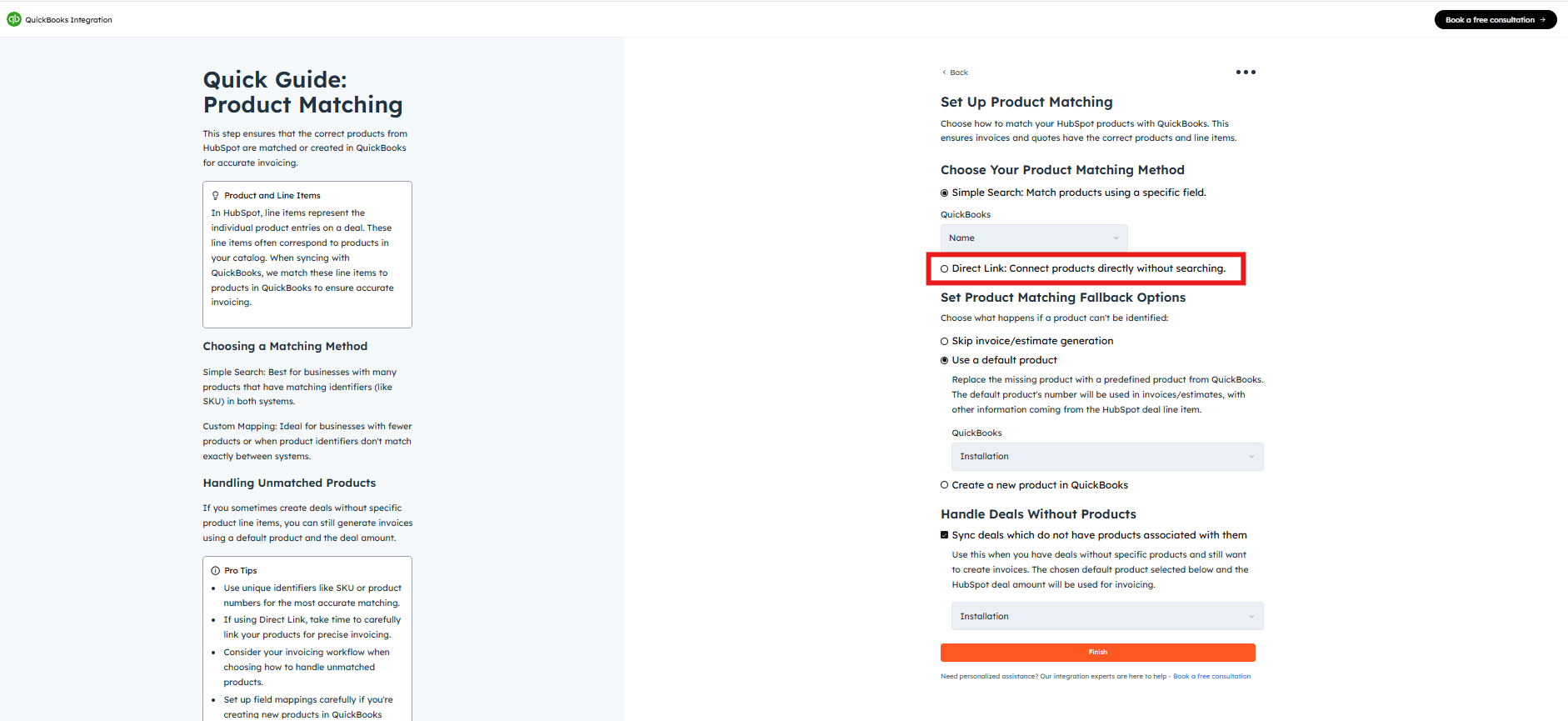
Advanced Settings
Set Product Matching Fallback Option
This option handles cases where a product is not found during the search. Choose one of the three behaviours below:Skip Invoice Generation
Select this option if you prefer not to create an invoice when a product isn’t found in QuickBooks.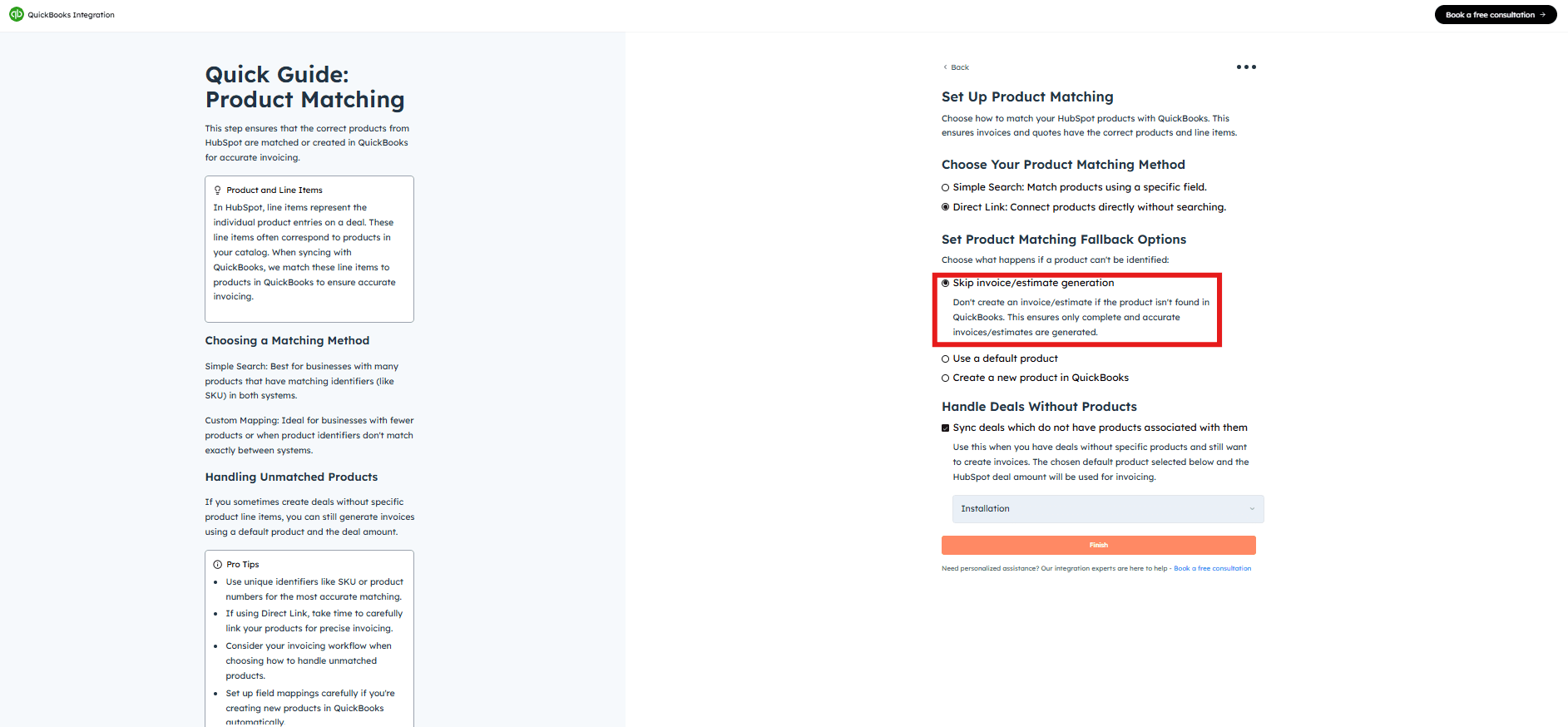
Use a Default Product
When a product is not found in QuickBooks, the integration will fall back to a default item to generate the invoice. If you select this option, you must specify a default product from your QuickBooks item list.
Create a New Product in QuickBooks
Automatically generates a new item entry in QuickBooks when a matching item isn’t found, using the product details from HubSpot. Select the product and click “Finish”.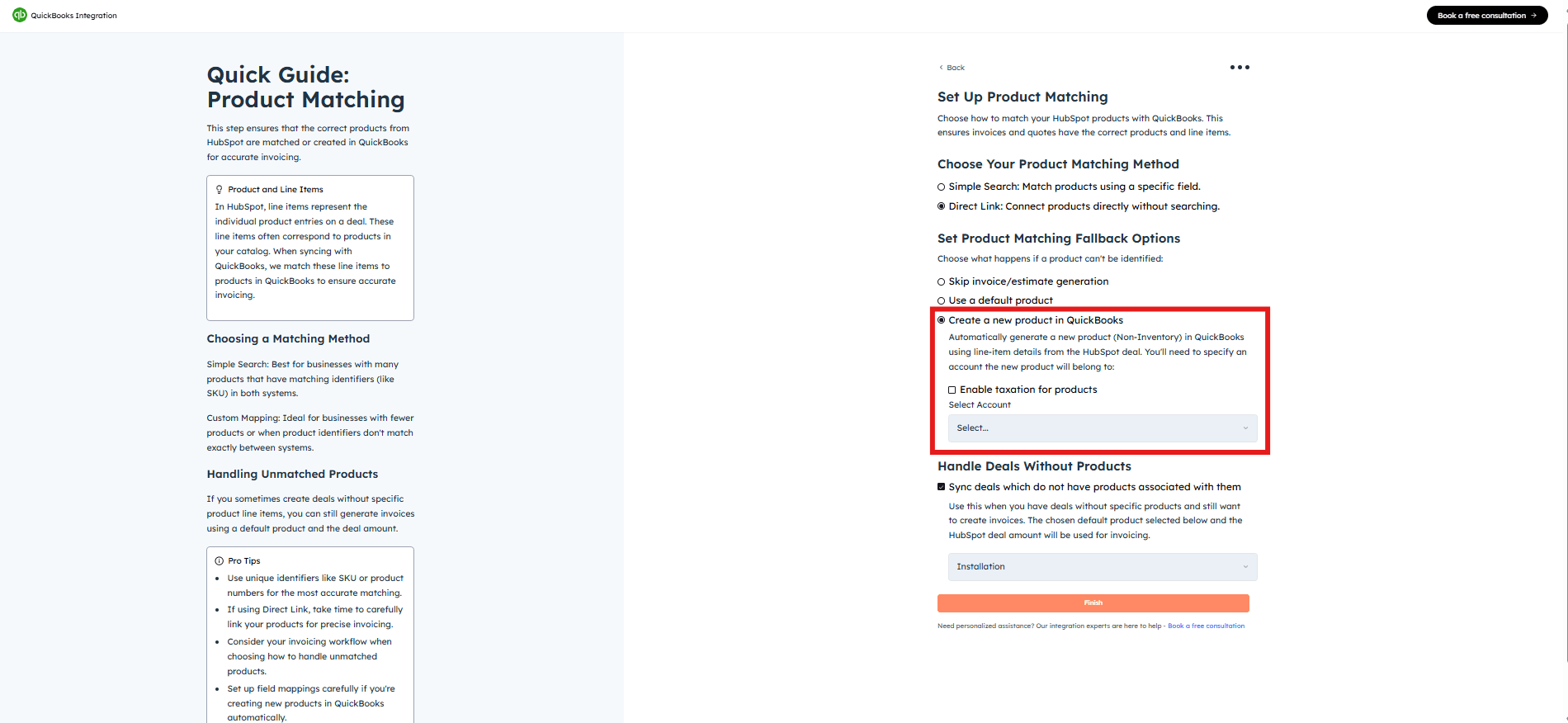
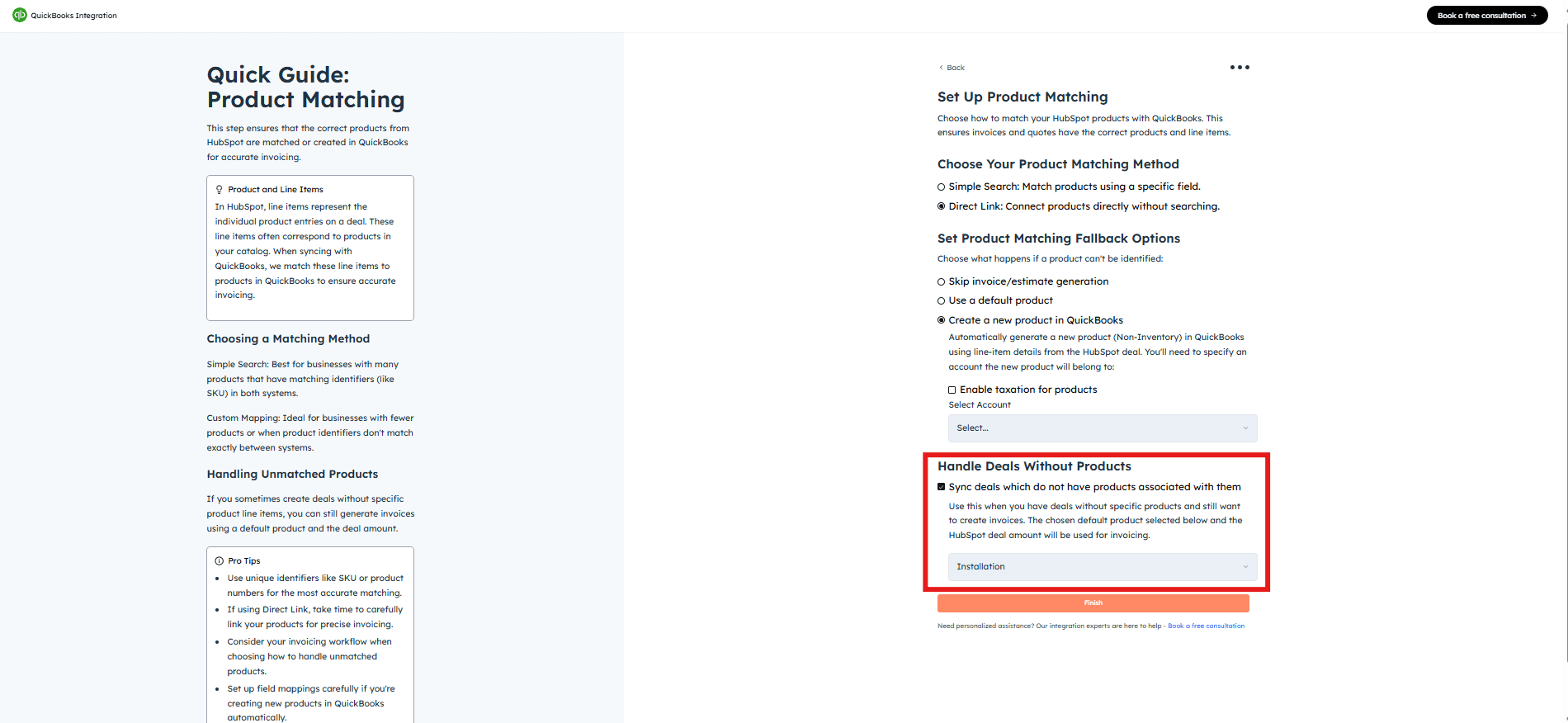
Sync Deals Without Line Items
This option creates an invoice/estimate using the deal value only — useful if you do not use line items in HubSpot deals.1
Check the “Sync deals which do not have line-items (products) associated with them” option.
2
Select a default product from the list to handle this scenario.
3
Click “Finish”.